


the beauty we fail to see
A couple of years ago, I attended the Buddhist Society of Great Britain’s annual Summer School. One morning before our first group meditation, we were told a story that stayed with me.
A young monk was given a special responsibility. He had been asked to serve as the Abbot’s attendant. One of his tasks was to clean the Abbot’s room each day. And he took it very seriously. Each morning he would go in carefully, sweeping, dusting, arranging everything with great attention. He wanted to do it perfectly.
One afternoon, the Abbot asked him quietly, ‘Are you sure you didn’t overlook anything?’ The young monk felt a jolt of anxiety. He bowed and hurried back to the Abbot’s room.
Had he missed something? A mark? A speck of dust? He looked everywhere. Behind the door. Under the table. Along the shelves. He searched more and more anxiously. But he could find nothing out of place, nothing wrong. He returned to the Abbot and said, ‘I’m sorry, I’ve looked very carefully, but I can’t see that I’ve missed anything.’
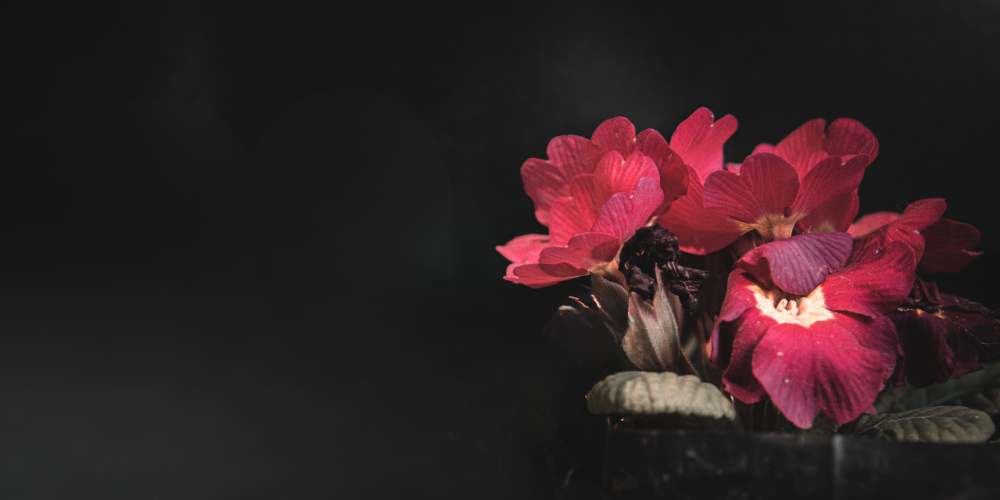
The Abbot looked at him and said, ‘When you were in the room, did you notice the poem in the corner, and the beautiful flower in the vase in front of it?’
‘No,’ the young monk said quietly, ‘I didn’t see them.’
The Abbot replied, ‘Looking for what was wrong, you overlooked the beauty there.’
Resting in God’s presence
A little while ago, one of our practice community members emailed and said: ‘I’ve found myself suddenly and intensely seeing the beauty of so many things large and small, such as the cloud formations, flocks of migrating birds, the shapes of the leafless trees, and the way dew or rain drops shine on the spiders webs in the hedges. I’d ‘looked’ at all of them over the years before, but I’ve not ‘seen’ them as I have recently. My life has been so enriched by this. I can only put it down to my meditation practice.’
Wonderful words about the open, receptive attention we cultivate in meditation.
In meditation, we simply practice being present, being open. We let go of our thoughts about what meditation (silent prayer) ought to look like, or feel like, and just get on with it. We let go of our thoughts about God. Instead of worrying about finding God, or experiencing God, we allow ourselves to simply rest in God’s presence.
‘I can’t will myself into wonderment,’ the person who emailed continued, ‘it all steals up on me when least expected, and is all the more precious for the surprise element when it does!’
That’s it! We don’t cultivate open, receptive attention through force of will, but through releasing. We can’t bring about this ‘wonderment,’ but we can open ourselves to it, moment by moment, breath by breath.
My experience at Prinknash Abbey
Some of you will remember me recalling how my Benedictine teachers at Prinknash Abbey encouraged me to stop looking for enlightenment (for ‘wonderment’) as if it were something I could grasp hold of – something different from ordinary daily life lived with a particular quality of open, receptive attention.
Whatever task I happened to be doing – working in the kitchen or the gardens, polishing the wooden floors or cleaning the toilets, I was to practise being as wholeheartedly present as possible. That by this simple means, I might see the flower in the corner of the room, the poetry present in every moment. That by this simple means we might see Christ in the face of the person before us. We might encounter Christ in the warmth of coffee, the kindness of someone letting us go first, in the flight of a bird, the movement of the wind on our face.
‘Did you notice the poem in the corner, and the beautiful flower in the vase?’ asked the Abbot. The flower is always in the room. The poem waits quietly to be heard.
In the Gospel of Matthew, Jesus is asked, ‘When did we see you?’ (Matthew 25:37-39). In the Gospel of Thomas, Jesus answers: ‘Split a piece of wood; I am there. Lift up the stone, and you will find me there.’

This blog is based on one of the teachings given in a recent online meditation group gathering. You are warmly welcome to join one of our future gatherings.
We use cookies (including Google Analytics and Meta Pixel) to enhance your browsing experience, serve personalised ads or content, and analyse our traffic. By clicking ‘Accept All’, you consent to our use of cookies.