Skip to content
We teach Christian meditation as a spiritual path to peace, community and oneness
  • Practice Community
  • Christian Meditation
  • Events & Retreats
  • Teachings
  • Guides
  • Meditation Timer
  • The Missing Peace book
  • About Us
  • Donate
  • Practice Community
  • Christian Meditation
  • Events & Retreats
  • Teachings
  • Guides
  • Meditation Timer
  • The Missing Peace book
  • About Us
  • Donate
  • Practice Community
  • Christian Meditation
  • Events & Retreats
  • Teachings
  • Guides
  • Timer
  • The Missing Peace book
  • About Us
  • Donate
  • Practice Community
  • Christian Meditation
  • Events & Retreats
  • Teachings
  • Guides
  • Timer
  • The Missing Peace book
  • About Us
  • Donate

One bread, One body

Eucharist & the mystery of communion

One of the things that has struck me this week during my time visiting Sister Annabel Laity, a senior monastic at Plum Village Buddhist community in France, is how much emphasis is placed on community.

Not ideas about community, but the practical reality of it. People prepare food together, eat together, clean together, walk together, meditate together, hold an umbrella for each other in the rain. Very little is done alone. Both Buddhism and Christianity understand something that our culture often forgets: we do not become ourselves in isolation.

The title of the retreat which Sister Annabel and I will lead together in September is, Towards a Global Spirituality: Buddhist-Christian Wisdom for Inner Peace in a Troubled World.  Although these traditions often use different language, both invite us to see reality more clearly.  Both the Buddhist and Christian contemplative traditions recognise that much of our suffering arises from the illusion that we exist separately from one another.

Interbeing, Communion and Oneness

As long as we imagine ourselves to be isolated and self-contained, we remain trapped in fear, competition, and division. But when we begin to glimpse the deeper unity that underlies our apparent separateness, our relationship with everything changes.

The Plum Village tradition of Buddhism speaks of interbeing: the insight that all things arise in relationship and depend upon one another. Christianity says the same, while using the words of communion and oneness: that we belong to one another as members of one Body, that we live, move, and have our being in God who is infinite communion, infinite relational love.

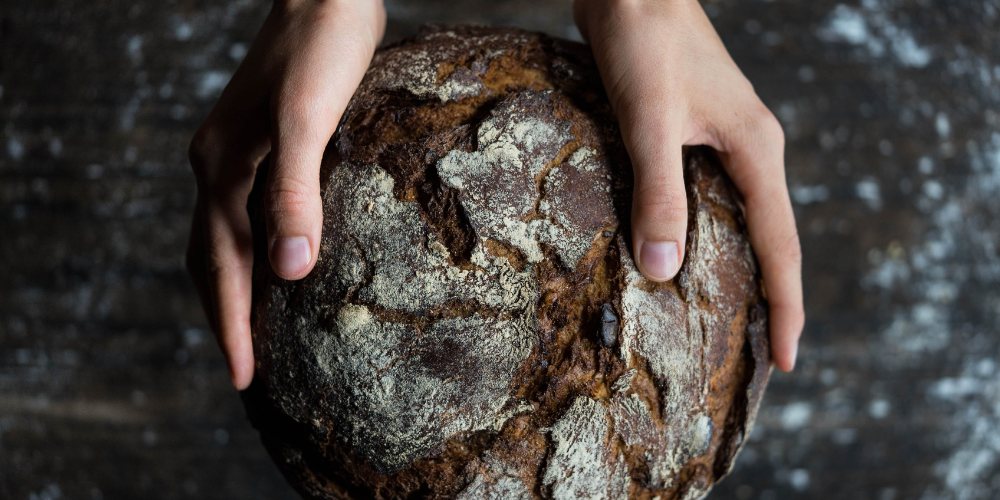
Think for a moment about something as ordinary as a loaf of bread. It appears to be a single thing, separate from other things around it. Yet it cannot be separated from the sunlight, rain, soil, plants, farmers, birds, millers, bakers, and transport workers, from any of the countless relationships stretching across time and place that have all contributed to its existence. Remove any one of these and the loaf would not be here. What appears to be one thing is actually the coming-together of many causes and conditions, of many lives. And the same is true of each of us.

We ‘Inter-Are’

In both Christianity and Buddhism, oneness is not merely a philosophical idea to sign up to, but a fundamental truth which we come to recognise through a transformation of perception, in the opening of awareness. We come to recognise that no life stands alone, that we ‘inter-are.’

From this recognition and the daily practice of living an ethical life, flow compassion, justice, and peace, because we can no longer see the suffering or flourishing of another person, another being, as unrelated to our own.

In her book, Mindfulness: Walking with Jesus and Buddha, Sister Annabel quotes her teacher Thich Nhat Hanh (Buddhist monk and Founder of Plum Village) saying:

‘Every advance in our understanding of ourselves, nature, and our place in the cosmos deepens our reverence and love. To understand and to love are two fundamental needs…Humanity needs a kind of spirituality that we can all practise together. Dogmatism and fanaticism have been the cause of great separation and war.

If existing religions and philosophies, as well as science, can make an effort to go in this direction, it would be possible to establish a cosmic religion, based not on myth, belief, or dogma, but on evidence and the insight of interbeing, and that would be a giant leap forward for humankind.’ (1)

No grain of wheat becomes a loaf by itself…

Christians have traditionally spoken about the reality of interbeing using the word communion. Nowhere is that more beautifully expressed, I think, than in the Eucharist, the sacramental meal that makes visible and invites us to participate in the mystery of our oneness.

One of the most beautiful things said about the Eucharist I have ever come across, was said by Saint Augustine. In a truly extraordinary sermon he says:

‘Be what you see; receive what you are.’ (2) In the same sermon he says: ‘It is your own mystery that is placed on the Lord’s table. It is your own mystery that you are receiving.’

On first hearing, these words can sound rather strange. Surely, when we come to the Eucharist, we are receiving Christ. We are receiving the Body of Christ. But Augustine wants us to see, to know something more. When we receive the Body of Christ, we are also receiving an invitation to see who we truly are.

The words spoken at communion are simple: ‘The Body of Christ.’ And we respond: ‘Amen.’

For Augustine, that ‘Amen’ is not simply agreement that Christ is present in the bread. It is also an affirmation of our deepest identity. This is the Body of Christ. And I belong to that Body. I am part of this communion, this oneness of infinite love. And, I am invited, called, to become what I receive, and am always receiving, to become this infinite love.

Augustine points to Saint Paul’s image of bread and wine.  No grain of wheat becomes a loaf by itself. No grape becomes wine by itself. No person comes to fullness of life alone. What we celebrate at the altar is woven into and is the source of creation itself. The grains do not cease to exist in the bread. The grapes do not cease to exist in the wine. Yet something new emerges from their gathering together.

Many grains, one loaf. Many grapes, one cup. Many persons, one Body. The Eucharist reveals a mystery that lies at the heart of Christian life, of all of life: the mystery of oneness in diversity, communion without the loss of uniqueness. A mystery that has been glimpsed by all the great contemplative traditions of the world.

‘That they may all be one’

This is the same mystery we hear in the prayer of Jesus, ‘That they may all be one.’ Jesus does not pray that we become identical. He prays that we all become one in love.

In our culture, we often imagine that we must choose between individuality and unity, oneness. Either we remain separate individuals, each enclosed within a separate life, or we dissolve into some larger whole.

The Christian vision is different. The Christian vision is communion. The more deeply we enter into God, the more deeply we discover our connection with one another, our oneness with the One.

Meditation: a practice of oneness

When we sit in meditation, we allow our scattered attention to return to the One. We allow ourselves to be gathered. Letting go of our constant preoccupation with our thoughts, with ourselves, we allow ourselves to become still. We allow ourselves to rest in God’s presence.

Meditation is a practice of oneness because it gradually loosens our habitual sense of separateness and allows us to experience this communion, this oneness for ourselves.

Whether we recognise it or not, our lives are intertwined and inseparable. We affect one another constantly. We belong to one another far more deeply than we realise.

The purpose of meditation is not to escape the world – but to return to the world with new sight. What might have seemed ordinary and familiar becomes radiant. The person standing before us becomes a luminous mystery. We begin to see that every human being bears within them the presence of Christ. This is where the Eucharist leads us.

‘You are the Body of Christ’

‘My friends, says Augustine, ‘if you want to understand the body of Christ, listen to the Apostle Paul… “You are the body of Christ, member for member.” [1 Cor. 12.27] If you, therefore, are Christ’s body and members, it is your own mystery that is placed on the Lord’s table! It is your own mystery that you are receiving! You are saying “Amen” to what you are.’

As we come to recognise Christ in the bread, we come to recognise Christ within us, that God is our being. We begin to recognise Christ in the community gathered around the table. Then we begin to recognise Christ in the stranger. In the hungry. In the lonely. In the vulnerable. In the person who irritates us. In the person we have overlooked. In the person we find difficult to love.

Jesus speaks about this very directly in the twenty-fifth chapter of Matthew’s Gospel when he says: ‘I was hungry and you gave me food. I was thirsty and you gave me drink, a stranger and you welcomed me. Naked and you clothed me, ill and you cared for me, in prison and you visited me’.

People asked, ‘Lord, when did we see you hungry and feed you, or thirsty and give you drink?’ When did we see you a stranger and welcome you, or naked and clothe you? When did we see you ill or in prison, and visit you?’ And Jesus replied: ‘Inasmuch as you did it for one of the least of these, you did it for me.’

Notice the question. ‘When did we see you?’ A new way of being is always rooted in a new way of seeing, with having our sight restored, our awareness opened. Can we see who is standing before us? Can we recognise the presence of Christ hidden within the ordinary circumstances of life?

The Cosmic Christ

Can we see that the person before us is not separate but inseparable from us, that we are one within the one Body of Christ? Augustine would say that this is precisely what the Eucharist teaches us. We come to the altar to receive Christ. But we also come to learn how to recognise Christ.

‘The cosmic Christ, son of the living God, is present in all things,’ writes Sister Annabel. ‘In our refectory in the monastery, we have a calligraphy of [Thich Nhat Hanh] that reads, “The bread you hold in your hand is the body of the whole cosmos.” When contemplating these words, I feel Buddhism and Christianity and maybe all religions coming together.’

This blog is based on one of the teachings given in a recent online meditation group gathering. You are warmly welcome to join one of our future gatherings.

free sign up
  1. Sister Annabel Laity, Mindfulness: Walking with Jesus and Buddha (Orbis Books, 2021), pages 139-140
  2. https://earlychurchtexts.com/public/augustine_sermon_272_eucharist.htm
  3. Mindfulness: Walking with Jesus and Buddha, page 40.
PrevPreviousStillness
NextThe Spacious PlaceNext

“The School of Contemplative Life has rapidly become my spiritual home.”

“I am feeling that I am coming to truth – and the peace that accompanies that sense of being.” 

“Since meditating, I am much more likely to see things and appreciate things as Sacred.”

CONTACT

  • +44 (0) 7834 626426
  • [email protected]
  • Safeguarding Policy
  • Participant Code of Conduct
  • Website Terms and Conditions
  • Event Terms and Conditions
  • Bursary Guidelines
  • Privacy Notice
  • Charity reg no
Email us

Mailing list sign up​

Receive our quarterly newsletter and other occasional mailings.

Connect

Connect with us via Facebook, Instagram and Insight Timer.

 
Facebook Instagram Youtube

online meditation

A quiet space awaits—free online meditation, twice a week, everyone is welcome.

REGISTER NOW

Managed by DevEdge

Manage Consent

We use cookies (including Google Analytics and Meta Pixel) to enhance your browsing experience, serve personalised ads or content, and analyse our traffic. By clicking ‘Accept All’, you consent to our use of cookies.

Functional Always active
The technical storage or access is strictly necessary for the legitimate purpose of enabling the use of a specific service explicitly requested by the subscriber or user, or for the sole purpose of carrying out the transmission of a communication over an electronic communications network.
Preferences
The technical storage or access is necessary for the legitimate purpose of storing preferences that are not requested by the subscriber or user.
Statistics
The technical storage or access that is used exclusively for statistical purposes. The technical storage or access that is used exclusively for anonymous statistical purposes. Without a subpoena, voluntary compliance on the part of your Internet Service Provider, or additional records from a third party, information stored or retrieved for this purpose alone cannot usually be used to identify you.
Marketing
The technical storage or access is required to create user profiles to send advertising, or to track the user on a website or across several websites for similar marketing purposes.
  • Manage options
  • Manage services
  • Manage {vendor_count} vendors
  • Read more about these purposes
View preferences
  • {title}
  • {title}
  • {title}