




‘There is no Christian way of perfection that is better or worse than anybody else’s: the actual Gospel is that we do not need it since God is taking humankind, the human race, to himself.’ Herbert McCabe OP
In the fourteenth chapter of St John’s Gospel, Jesus says, ‘Nobody comes to the Father but by me.’ How are we to understand those words? How should Christians view other faith and spiritual traditions?
In 1965, the Catholic Church issued a Declaration on its relationship with other faiths. It explains that the Church “rejects nothing that is true and holy in these religions. [The Church] regards with sincere reverence those ways of conduct and of life, those precepts and teaching which, though different in many aspects from the ones she holds and sets forth, nonetheless often reflect a ray of that Truth which enlightens all men and women.”
In the Parable of the Good Samaritan, Jesus chooses an outsider – a follower of a despised religion – to exemplify the embodiment of the unconditional love of God. He praises the faith of a Roman centurion above anyone he has met in Israel.
What are we to make of all this?
All the major religions that believe in God say that all of humanity has knowledge of God in one form or another. St Paul affirms in his letter to the Romans that what can be known of God is already plain to all (1:19–20).
In this special day retreat, we’ll explore how we might understand the different religious and spiritual traditions of the world as different approaches to and expressions of a single Truth – as a kaleidoscope of light.
My teacher, Sylvester Houédard OSB, embodied a unique synthesis of deep Christian contemplative wisdom with a profound openness to other spiritual traditions. A pioneer in interfaith dialogue, he coined the phrase “the wider ecumenism.” He believed that the contemplative dimension of religion is a common thread that can draw traditions closer together — not by diluting their differences, but by meeting in their shared depth.
‘I don’t believe that any religion as such saves. Christianity doesn’t save. God saves. And I don’t believe grace is confined to any specific community.’ David Bentley Hart
The day retreat has been carefully crafted to be inclusive and accessible, welcoming anyone interested in exploring these questions from a Christian contemplative perspective, regardless of their own faith, beliefs or previous experience of meditation.
Drawing on the teachings of David Bentley Hart, Herbert McCabe, Dom Sylvester Houédard and others, the day will involve a flow of short talks, silent meditation practice and conversation.
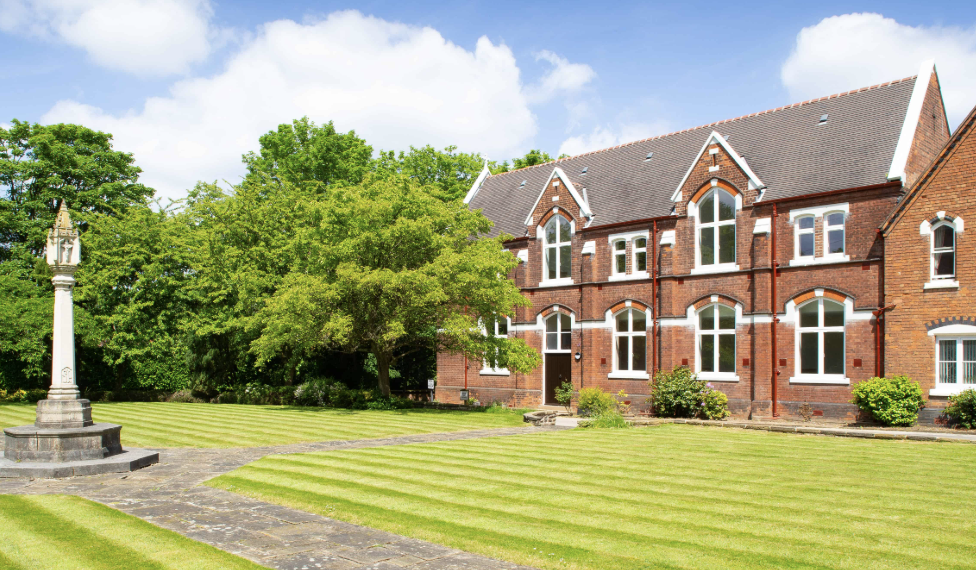
For those travelling by car, there are 40 spaces on site (Conference C car park) and plenty of space on the road outside the convent. By train, Selly Oak is the nearest convenient railway station, with regular services from Birmingham New Street; the Convent is a short onward taxi journey. By bus, services 61 and 63 run regularly from Birmingham city centre along the nearby Bristol Road, from where the Convent can be reached on foot.
Chris Whittington is the Founder of The School of Contemplative Life. He was introduced to contemplative practice during several years of formation when he lived at the Benedictine monastery of Prinknash Abbey in Gloucestershire. Chris’ monastic teachers taught meditation as a universal wisdom found within all the great spiritual traditions, a pathway to peace and solidarity with people of all faiths and none. Following an introduction by the Abbot of the Prinknash community, Chris subsequently studied at the Dalai Lama’s monastery in Dharamsala, India.
The School of Contemplative Life is home to a free online Christian meditation practice community, with live teaching and shared silence every Saturday (08:30–09:30) and Wednesday (20:00–20:45). More than 350 people now gather each week to meditate together. Practising alongside others provides encouragement, rhythm and a sense of belonging that helps establish meditation as part of daily life.
If you would like to explore this ancient contemplative tradition and join others seeking to cultivate the peace that begins within and flows out into the world, you are very welcome to join us – click here for more information.
Events organised by The School of Contemplative Life are subject to our Event Terms & Conditions (available in full here). Where an event is organised and hosted by a third party, their own terms and conditions apply.
Please note: our events and those we contribute to or lead on behalf of a third party should be understood as providing spiritual guidance and advice to help participants deepen their own meditation practice and understanding. If you have any mental, emotional or physical health conditions, please ask your medical practitioner if it is advisable for you to attend and make sure you always follow your medical practitioner’s advice.
All Bursary applications are administered by The School of Contemplative Life in accordance with our Bursary Guidelines.
Any donations made will support The School of Contemplative Life, a UK registered charity.
We use cookies (including Google Analytics and Meta Pixel) to enhance your browsing experience, serve personalised ads or content, and analyse our traffic. By clicking ‘Accept All’, you consent to our use of cookies.