


Entering the prayer of the heart
Someone emailed a little while ago to ask about something they’d been encountering in their meditation practice.
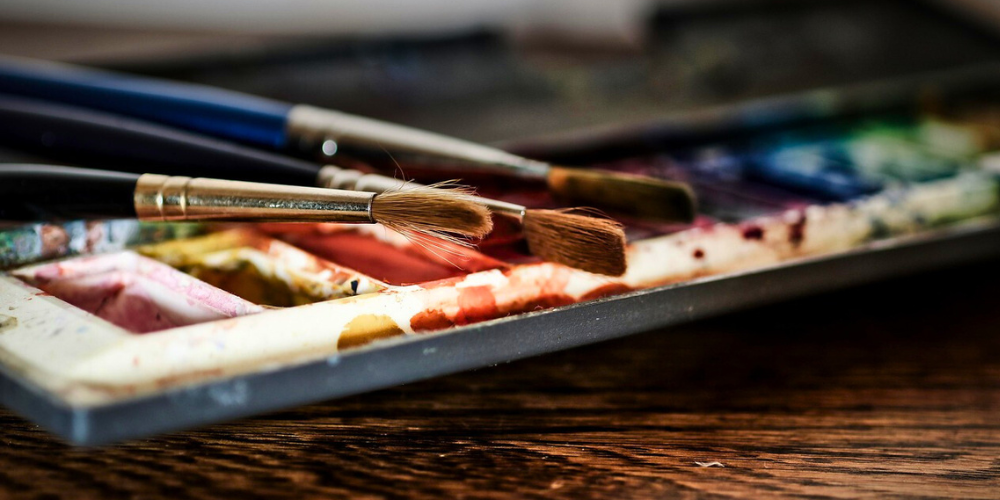
‘I’m a very visual person,’ they wrote. ‘I see things in pictures. Do you have any advice for visual people whose mind is often searching for a picture?’
I suspect many of us recognise this – the mind searching for something to look at, something to hold onto, or just producing a whole stream of images for no apparent reason. I wrote back saying that quite a few of our practice community are artists, or would otherwise describe themselves as very ‘visual’ people, and that her question was both important and one that all who are interested in the silent prayer of meditation will likely have to face at some point.
‘Beware of the imagination’
As many of you know, our tradition of meditation flows directly from the practice and teachings of early Christian contemplatives known as the Desert Fathers and Mothers. And they have a great deal to say about images. Their constant cry was, beware of the imagination at the time of prayer.
As you’ll have heard me say before, it can seem strange, even unsettling at first to encounter an ancient way of prayer that invites us to let go of our words and images, to press pause on the gift of the imagination. Most Christians today are trained to think of prayer mainly in terms of words and images, to use the imagination as a primary vehicle of prayer. And so, the invitation of imageless prayer can seem like an invitation to abandon the tools and guide-ropes we use to navigate life and make sense of our world. And it is. That’s precisely the invitation.
Now, before I say anything else (and to avoid any misunderstanding), let me say very clearly that the imagination is an extraordinary gift, and that the wise use of images can be of great value in the spiritual life. The use of religious icons is a good example (the Greek word icon (εἰκών) translates as image). As strikingly beautiful as many icons are, they are not created to draw our attention to artistic skill or craftsmanship. They point beyond themselves. They help lead us into prayer.
Prayer of the heart
So, why has learning to let go of images always been a central concern of what has traditionally been spoken of as inner prayer, pure prayer, prayer of the heart?
The great nineteenth-century Orthodox bishop and prolific author on the spiritual life, Theophan the Recluse, expresses the wisdom of this teaching with wonderful directness and simplicity. Let’s listen to some of what he has to say about the imagination and meditation, prayer of the heart. (1)
‘Hold no intermediate image between the mind and the Lord,’ says Theophan. That would be like being with someone we love and holding up a photo of them between us. ‘Do not permit yourself any concepts, images, or visions’; ‘dispel all images from your mind’; ‘in prayer the simplest rule is not to form an image of anything.’
Our mind, which is usually distracted and scattered, preoccupied with the thoughts that are always ‘whirling about, like snow in winter or clouds of mosquitoes in the summer,’ must be collected, unified, brought to a single point of receptive attention, to become a simple gazing towards the One who cannot be imagined, whose presence is secret to the mind, but known by the heart.
It’s entirely natural, says Theophan, that ‘when we try and bring our spiritual powers [our mind] under control, the path from without to within is blocked by the imagination. To arrive safely at our inward objective, we must travel safely past the imagination.’
Notice Theophan’s use of the word ‘safely’. He’s alerting us to a trap we can easily fall into. ‘If we are careless about this,’ he says, ‘we may stick fast in the imagination and remain there…’ Just as our attention can become glued to a gripping film being projected onto a cinema screen, we can become entranced with the thoughts and images that arise in our mind (particularly the holy-looking ones!) and become glued to them. We can ‘remain there,’ says Theophan, ‘under the impression we have entered within, whereas in fact we are merely outside the entrance in the court of the Gentiles.’ This is a powerful metaphor.
The Court of the Gentiles
In the Second Temple rebuilt and expanded by Herod the Great, the temple complex was divided into progressively more sacred areas. The Court of the Gentiles was the outermost court of the Temple, standing at some distance from the innermost space, the Holy of Holies. Open to all people, including non-Jews, it represented the possibility of inclusion, but stood as symbol of division, with its walls demarcating who was ‘in’ and who was ‘out’. To remain here, is to remain in a place of stark dualisms, where God and other people always appear separate from us.
Being stuck in the outer court of the temple – of our being – ‘would not matter so much,’ says Theophan, ‘were it not that this state is almost always accompanied by self-deception.’ Strong words from Theophan. And they need to be. The images the imagination creates can appear like depth, while holding us captive at the very surface of prayer while we stare at them.
The whole purpose of the spiritual life, says Theophan, is to place ourselves ‘in a right relationship with God: and this right relationship is realised and made manifest in prayer.’ A right relationship with God. Not a right relationship with thoughts and images about God. Thoughts and images can help us come into a right relationship with God. But God is not a thought, or an image.
The role of thoughts and images
Thoughts and images can help us gather ingredients and produce a delicious meal. But the thoughts and images are not the meal. A good recipe book is filled with valuable information. But once it’s served its purpose, we put it down. If we continue to stare at it, we will end up very hungry, and there’s little nutritional value to be found in chewing it!
There comes a point when we can say thank you to our mind, and then just eat the meal. And so it is with prayer. The many and varied forms of prayer that use words and images can be of great value in bringing us to the meal. Meditation, silent prayer, is all about eating the meal.
How do we go about this?
‘In prayer,’ says Theophan, ‘the simplest rule is not to form an image of anything [and when you do, to let it go]. When an image arises — as it naturally will — simply notice it, and return your attention to the practice. ‘Gathering the mind in the heart, stand in the conviction [trust] that He is near…and prostrate yourself,’ surrender your thoughts and words and images before the One who is ‘very close in His loving-kindness toward us.’
‘Images,’ Theophan continues, ‘however sacred they may be, retain the attention outside, whereas at the time of prayer the attention must be within – in the heart. The concentration of the attention in the heart – this is the beginning of all true prayer.’
Why has learning to let go of images always been so important in meditation, for prayer within the inner room of the heart? Quite simply, because God, who has no boundary, no edges, cannot be made into an image, reduced to something that must always have a boundary and edges. The infinite is always infinitely beyond the grasp of the finite mind, but it can be known by the heart because it is the heart of who we are.
Passing through the veils of our mind
Before the destruction of the Second Temple by the Romans, the Holy of Holies (the innermost space at the centre of the Temple) was accessible only to the High Priest once a year. And before they were lost or destroyed, in order to read what was inscribed on the stone tablets in the stone temple, the High Priest had to pass through physical veils. Jesus taught that what God once inscribed on stone for Moses, is also available for us to read, because it is inscribed on the heart of every human being. And what is inscribed there is the very nature of what our deepest truth is.
We too must pass through the veils, the veils of our mind – thoughts, words, images – to reach what lies behind them: the truth of who we are. This is the process by which we come to know our self, and in knowing our self, know God, and know that God is being. In meditation we accept the invitation to look beyond our thoughts, beyond all the wonderful gifts of the imagination. Leaving the outer rooms of our mind, we enter the ‘inner room’ of the heart (Matthew 6:6). Gazing beyond the images we create about life, we open to the source of life itself.
My teacher, the Benedictine monk Sylvester Houedard, liked to remind people that the Holy of Holies in the Second Temple was empty. It contained nothing visible. And that this must have been a great disappointment to the Romans who ransacked their way into this most sacred space in the year 70.
The apparent emptiness, he said, was a silent teaching. To the mind that likes to fill every space with images, there was nothing to be seen. But to the heart, the emptiness was unimaginable fullness, the All beyond all images, all imagining.

This blog is based on one of the teachings given in a recent online meditation group gathering. You are warmly welcome to join one of our future gatherings.
We use cookies (including Google Analytics and Meta Pixel) to enhance your browsing experience, serve personalised ads or content, and analyse our traffic. By clicking ‘Accept All’, you consent to our use of cookies.